
The Spring Support in piping is used to cater for thermal expansion within a pipeline to balance slight vertical displacements and in industrial applications to manage the vertical movement of pipes due to thermal changes. It reduces the impact of temperature changes and subsidence in piping.
Two main Spring Support types are used in piping system – Constant and Variable. Constant Spring Support maintains a uniform supporting force throughout their entire travel range, whereas Variable Spring Support changes their supporting force as the pipe moves and the spring compresses or extends.
Types of Spring Supports are different because they are engineered to handle varying degrees of vertical movement and load changes caused by thermal expansion in industrial piping systems. The choice of these depends on the amount of vertical pipe movement and the sensitivity of connected equipment. Both can be further classified by their subtypes – Operating type and Construction type.
Spring Support operating types
Spring Support in piping is classified in two main categories – “Variable” & “Constant” based on how they react to load variations during pipe movement. These are also divided by their mounting configuration (how they engage with the pipe). The subtypes under these main categories are described in detail here:
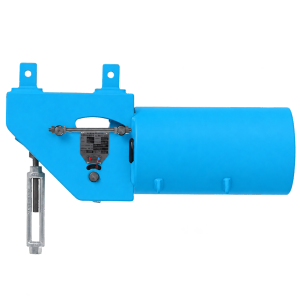
Constant Spring Support
This is a mechanical device used in piping systems to provide a uniform supporting force throughout its entire range of vertical movement. The construction types are – D, E, F, G. Load capacity – from 10 kg to 50 tons. They accommodate vertical travel movements from 1 to 24 inches. They are used in – critical high temperature piping, turbines, pumps, boiler nozzles, thermal power plants, nuclear stations, oil refineries, etc.
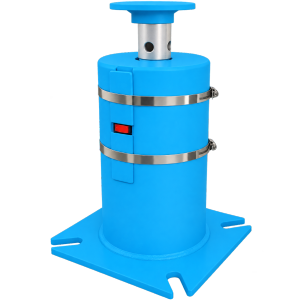
Variable Spring Support
This is an elastic mechanical device used in piping to carry the weight of pipes and equipment that move vertically due to temperature changes. The construction types are – D, E, F, G. The load bearing capacity starting from 10 kg and up to 50 tons with dual Springs. This type is generally used in – Power Plants, Oil and Gas Refineries, Chemical Processing, HVAC Systems etc.
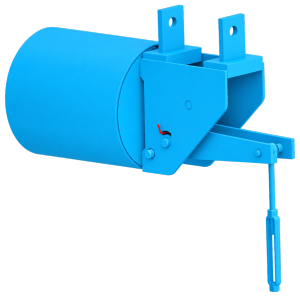
Constant Spring Hanger
This is a specialized mechanical support device used in piping and equipment systems to provide a uniform, unchanging supporting force despite vertical movements caused by thermal expansion or contraction. Available construction types are – A, B & C. Its load capacity ranges from 10 kg to 50 tons as per requirement. Their uses in the sector – Power generation, Oil and Gas refineries, Chemical plants, Compressor stations etc.
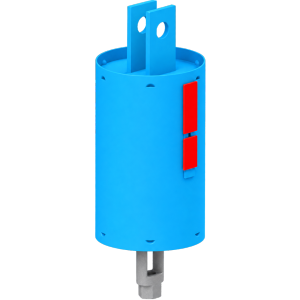
Variable Spring Hanger
This is a mechanical pipe support device that uses a helical compression spring to support piping systems that experience vertical thermal movements, meaning its supporting force changes as the pipe moves. Available construction types include A, B & C, depending on application. Its load capacity varies from 10 kg to 50 tons. They are used in the sectors of – Power plants, Oil and refineries, Petrochemical plants etc.
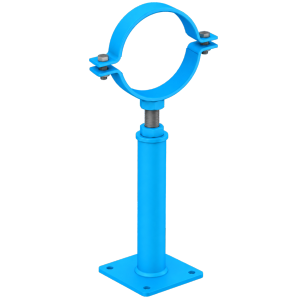
Resting / Grounded Pipe Support (without Spring)
These are the most common primary Supports used to carry the vertical gravity loads of a piping system, including the weight of the pipe, its contents and insulation. In their simplest form, they prevent downward vertical movement while allowing the pipeline to freely slide axially and laterally to accommodate thermal expansion. Subtypes are – Rigid Linear Rest Supports, Heavy-Duty Cradle & Component Rests, Low-Friction & Resilient Rests etc.
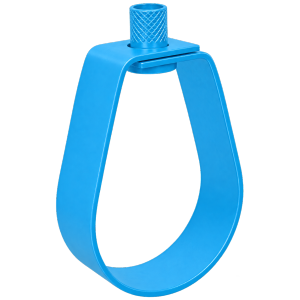
Suspended / Hanger Pipe Support (without Spring)
This is a specially engineered hardware component designed to transfer the structural load of a pipeline including the pipe weight, contents, insulation and fittings to an overhead supporting structure like a ceiling, beam or roof. These supports play a critical role in industrial and residential piping by anchoring the lines, guiding movement, absorbing operational shocks and preventing pipe collapse.
Spring Support construction types
Spring Support construction types – A to G represent standard, globally recognized configurations for variable Spring Hangers and Supports used in industrial piping systems. These designations categorize how the spring casing is mounted and how load adjustments or piping connections are made.
Type A : This is the most basic top-suspension hanger. It features a threaded coupling welded inside the top casing of the spring can. A hanger rod links this top seat directly up to an overhead structural beam attachment.
Type B : This configuration utilizes one welded suspension lug (“ear”) on the top casing plate. It connects to the overhead framework using a single clevis pin or a bolt, which is helpful if space constraints limit vertical tool clearance.
Type C : Similar to Type B, this variant features two welded suspension lugs on the top plate. This double-lug design accommodates complex horizontal clevis arrangements or dual-pin brackets.
Type D : Known as an inverted top anchor, this design features a hollow internal column that allows a single hanger rod to pass completely through the top of the casing down to the internal spring piston plate. This setup allows adjustments to the spring load from above the supporting structural deck.
Type E : A trapeze hanger arrangement, Type E uses two separate suspension rods connected to the sides or base of the spring can, down to a cross-beam or pipe clamp. This design is selected when structural framing or nearby pipelines block a single central rod path.
Type F : The standard base-mounted floor support. The bottom plate of the spring canister bolts or welds directly to the floor structural steel. The pipe rests on a load flange or a low-friction slide plate at the top of the spring piston rod.
Type G : A side-by-side trapeze hanger, Type G features two identical spring canisters placed horizontally on a shared crossbar framework. This setup handles heavy loads that exceed single-coil limitations while minimizing the vertical space required by the assembly.
Specifications of A to G types Spring Support
| Type | Support Arrangement | Technical Specification | Dimensional Data | Uses / Applications |
|---|---|---|---|---|
| A |
Top Threaded Connection
Spring support with a threaded bushing in the top plate for simple rod attachment to the supporting structure. 
|
|
|
Suitable where sufficient installation headroom is available. Commonly used for overhead piping in power plants, petrochemical plants, refineries and process industries. |
| B |
Single-Lug Top Connection
Spring housing provided with a single lug at the top for connection to the supporting structure. 
|
|
|
Used where headroom is limited and a compact lug connection is required. Suitable for process piping, power piping, refinery and industrial installations. |
| C |
Double-Lug Top Connection
Spring housing fitted with two lugs at the top for structural attachment. 
|
|
|
Suitable for overhead piping where a double-lug structural connection is required, particularly in restricted headroom installations. |
| D |
Top-Adjustment Structural Connection
Spring support arranged above the supporting steel with adjustment of the hanger rod from the top. 
|
|
|
Used where the spring support is positioned above the structural steel and adjustment from the top is required. Suitable for pipe racks and industrial structures. |
| E |
Below-Structure Adjustment Arrangement
Spring support mounted at the supporting structure with adjustment possible from below or above the structure. 
|
|
|
Recommended where adjustment access from below the supporting structure is important, especially in pipe rack and industrial piping installations. |
| F |
Base-Mounted Support
Spring support designed to support the piping from below, directly from the floor or supporting steel. 
|
|
|
Used for low-level piping, floor-supported piping, pipe racks, near-grade piping and locations where the pipe must be supported upward from below. |
| G |
Trapeze Spring Support
Two variable spring supports arranged with a crossbar to support a horizontal pipe run. 
|
|
|
Suitable for horizontal pipe runs where a single hanger arrangement is unsuitable. Commonly used for larger pipe sizes and wide support arrangements. |